Try to spot the detail before reading the note. Each work links to the National Gallery of Art in Washington and opens as a practice round.
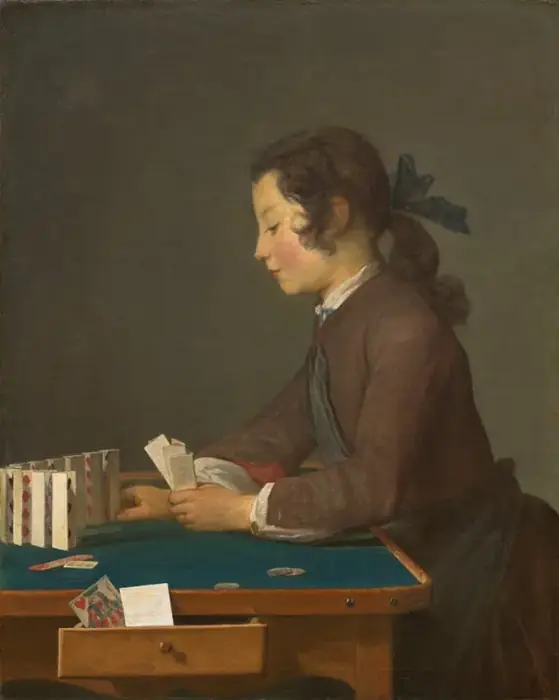
Jean Siméon Chardin · probably 1737
The House of Cards
A card at the table’s edge
Where to look
The cards the boy is building with stand upright. The card nearest us breaks that pattern and hangs over the drawer. Following that interruption takes your eye from his hand to the edge of the table.
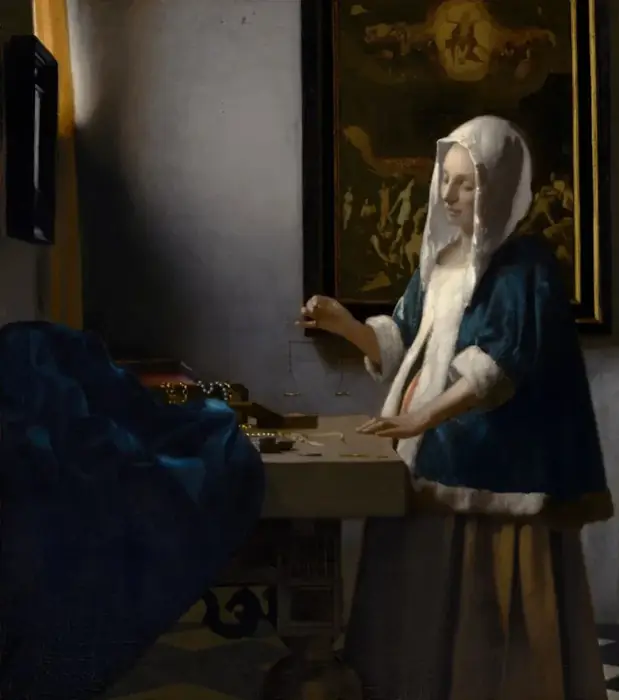
Start with the hand in the patch of light. Follow the fine lines of the scale downward, then look at the pearls spread below it. Those two groups of small shapes are easy to overlook in the dark room.
The big sail runs straight out of the frame. A second boat, small enough to miss at first glance, sits near the right edge. Your eye can measure the distance between the boats without any shoreline.
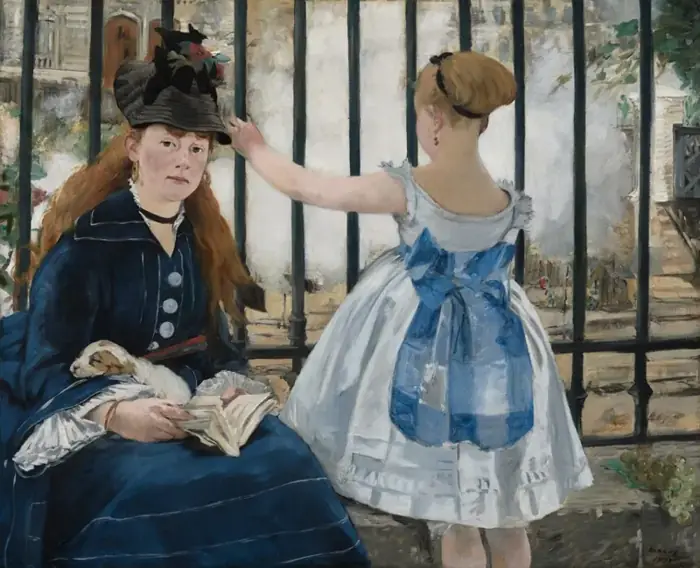
The girl looks through the bars while the seated woman looks back at us. The blue ribbon on one and the dark blue clothing on the other tie those two very different directions of attention together.
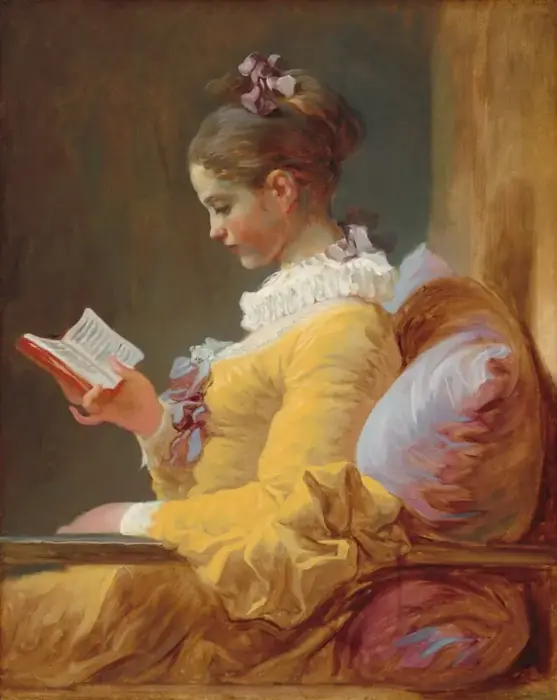
The open book occupies a surprisingly small part of the painting. Look at the reader’s tilted head, the bend of her wrist and the edge of the page. Those three diagonals all lead to it.
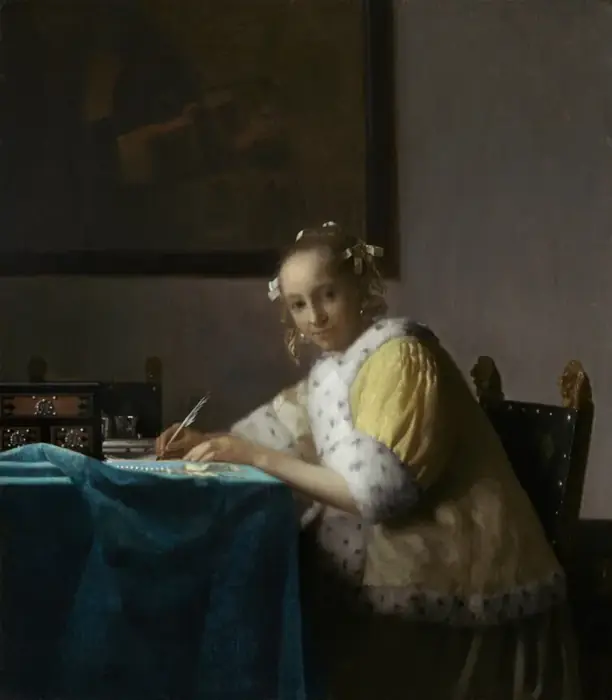
The pen is still poised above the writing surface while the sitter looks toward the viewer. Cover her face with a hand and the scene becomes work in progress. Uncover it and it feels like an interruption.
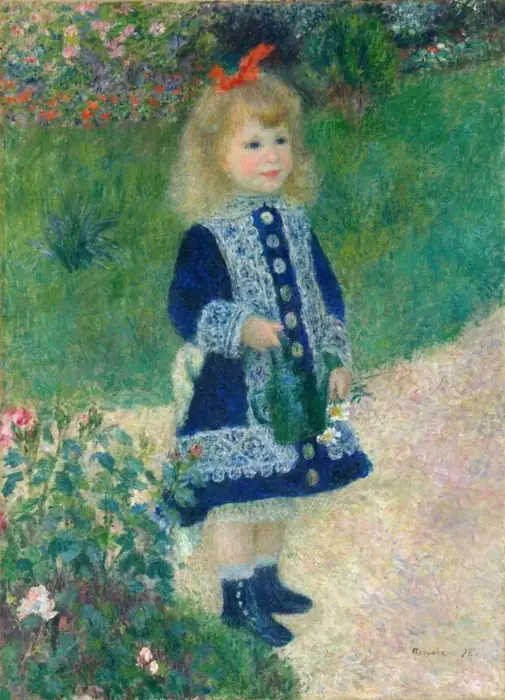
There are at least three distinct blues here. Compare the broad dress, the boots and the watering can. Their edges matter as much as their colors when the garden dissolves into small strokes.
The dark and reddish animals initially read as gaps between the leaves. Look for the rounded silhouettes first, then compare those curves with the long, pointed fronds that surround them.
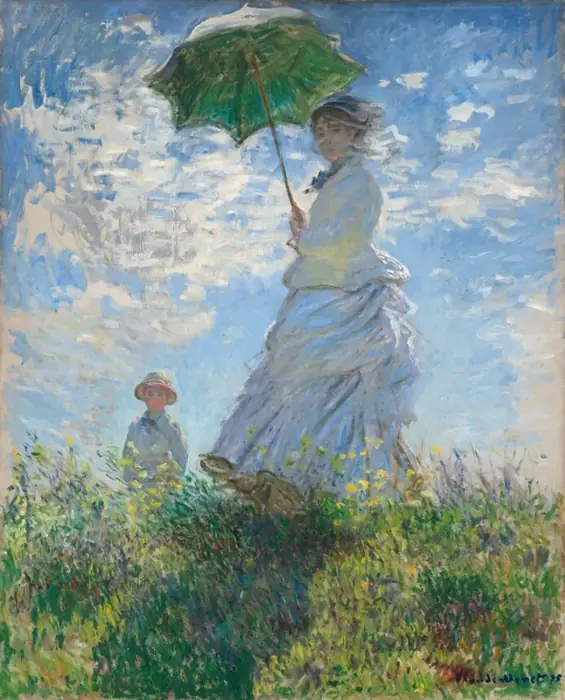
The low viewpoint puts two heads at very different heights. Look from the boy’s hat on the left to the woman’s face, then up again to the parasol. Almost the entire trip takes place against sky.
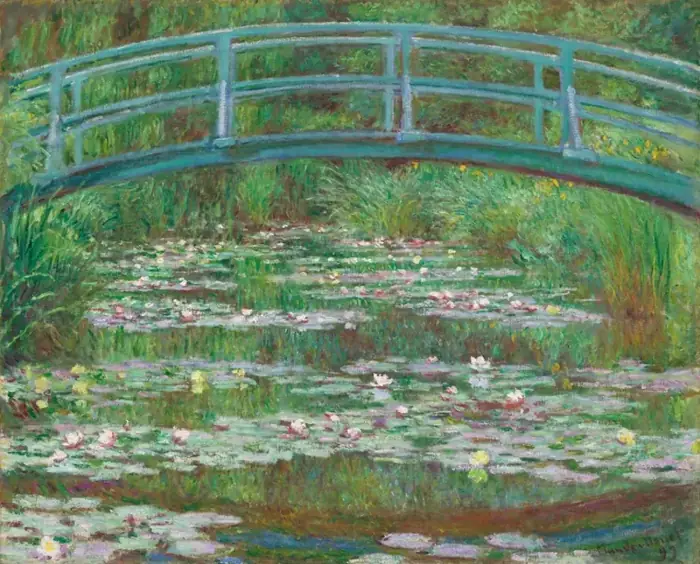
One long curve crosses the broken reflections and lily pads. Follow it from one side to the other. The railing gives the eye a continuous path through a surface made of small, separate marks.
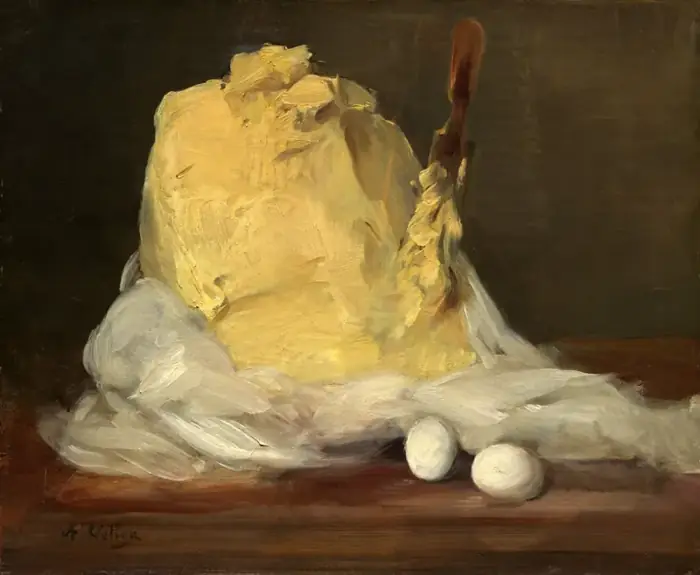
The eggs have smooth edges. The butter has ridges, the cloth has folds, and the knife cuts across all three textures. The contrast makes an ordinary kitchen table worth a second look.
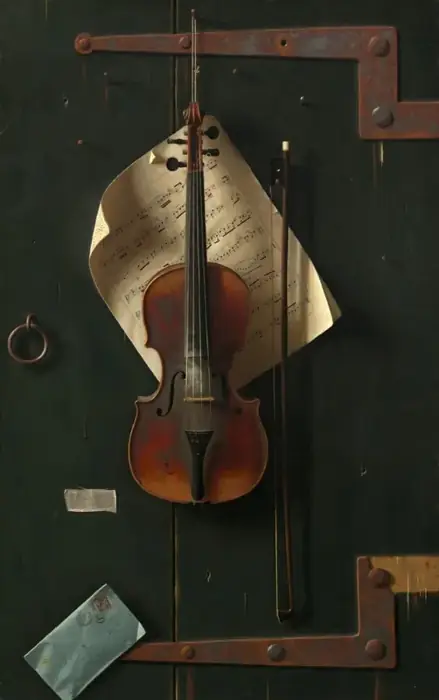
A letter, a sheet of music and a violin appear to occupy three different layers of space. Follow the overlapping corners down to the door hardware. That chain of edges makes a flat painting look almost touchable.
Show a detail and give everyone ten seconds to look. Ask each person to name one visible clue before showing the full frame. A shared date link opens the same three rounds for everyone.
Painting images courtesy of the National Gallery of Art, Washington, from its Open Access collection. Each record identifies the artist, date and collection credit. Game and looking notes by Honest Little Apps.